Gateways Creative
Designing a Physical-Digital Interactive Experience
Tools
Figma · FigJam · Illustrator
Role
Product Designer (UX/UI, Interaction, Systems Design)
Project Type
Location-Based Gaming · Spatial UX · Interactive Systems
Overview
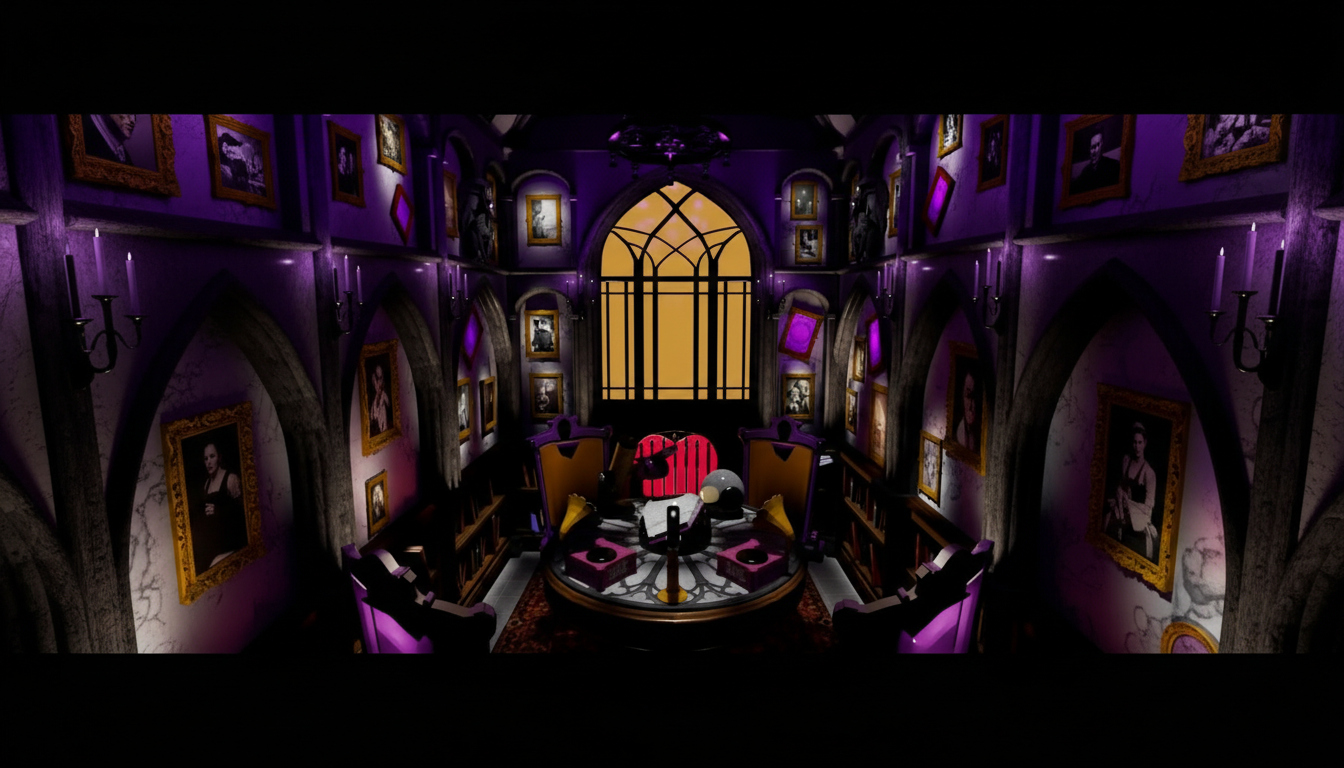
Gateways Cinescape is a location-based reality gaming experience that blends physical props with real-time projected interfaces.
For Ghost Writer’s Study, I designed the interactive UI systems supporting a 4-vs-1 asymmetric horror gameplay experience.
The Challenge
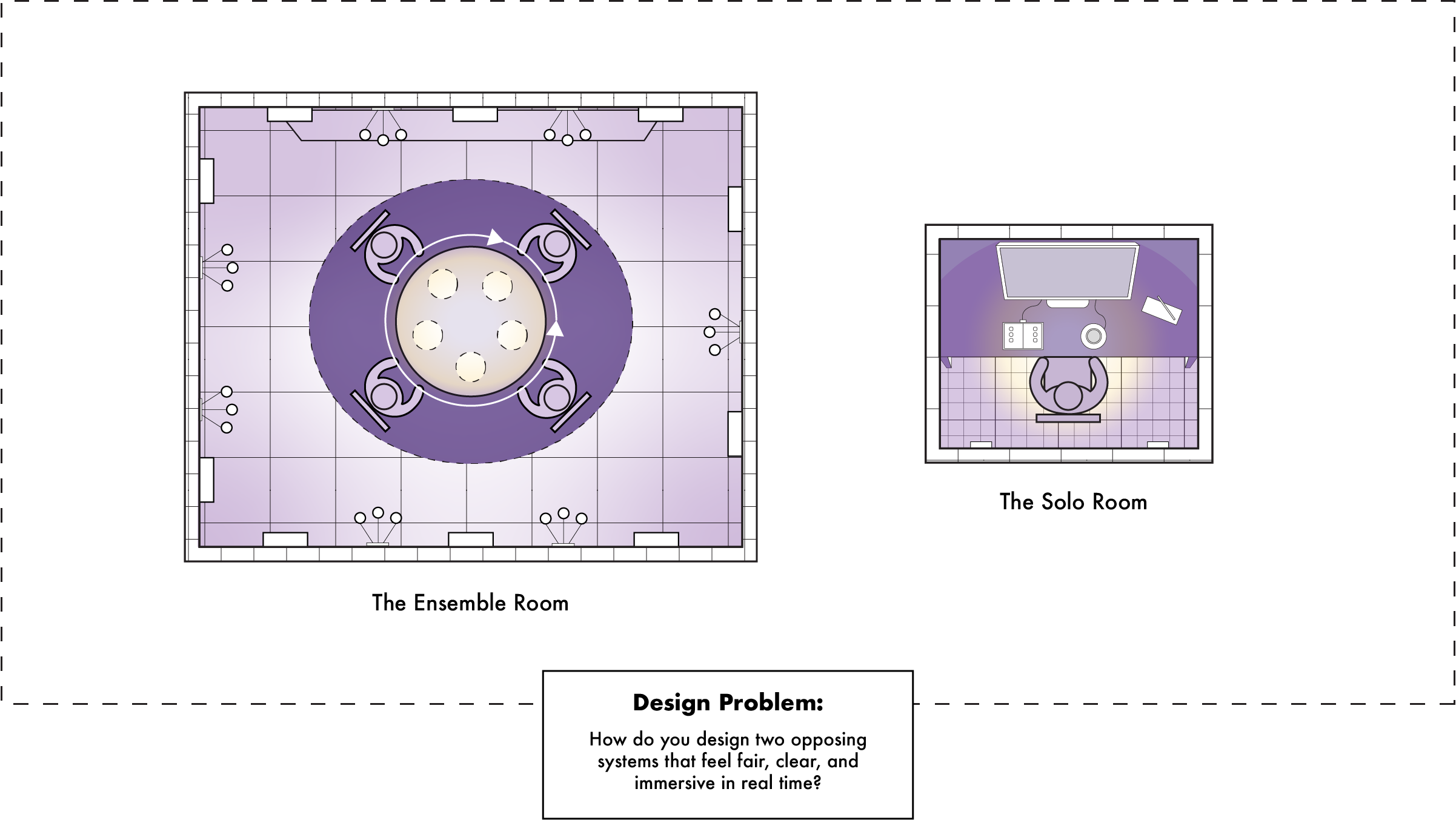
One Game. Two Different Experiences.
Gateways creates real-world, immersive games where players interact with both physical environments and digital interfaces.
In Ghost Writer’s Study, players are split into:
4 hunters (ensemble) sharing a physical space and projected UI
1 ghost (solo) controlling the game from a separate room
This creates asymmetric gameplay, where each role has different goals, information, and controls.
The Design Problem
How do you design two systems that feel fair, clear, and immersive?

Communicate
Critical game states instantly in a low-light physical environment
Support fast-paced
Physical and digital interaction loops under extreme pressure

Avoid overwhelming
For the solo player managing multiple variables
A Ghostly Game of Hide and Seek
At its core, the experience follows two opposing loops:
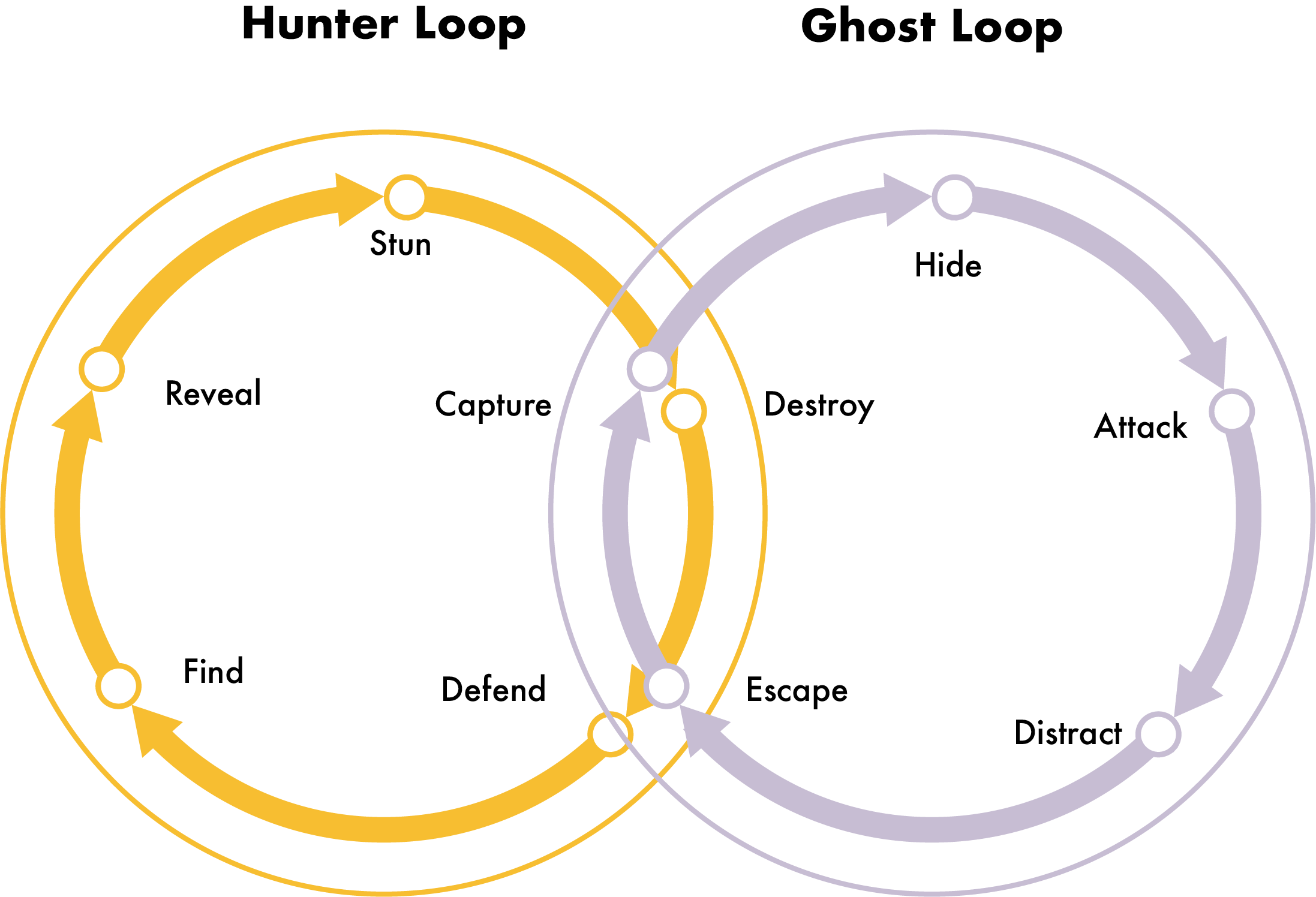
Mapping the Core Interaction Loop
Designing for Fast Recognition
The hunter experience was built around clear, repeatable states:
Searching → no feedback
Ghost found → audio + visual signal
Stunned → strong visual + vibration cue
Captured → clear resolution
Each state needed to be instantly recognizable in a dark, high-energy environment.

Stun & Capture States

Designing Within a Real Space
Designing for this experience required considering physical layout, visibility, and interaction flow alongside digital UI.
System 1: The Shared Projection
A Single Source of Truth
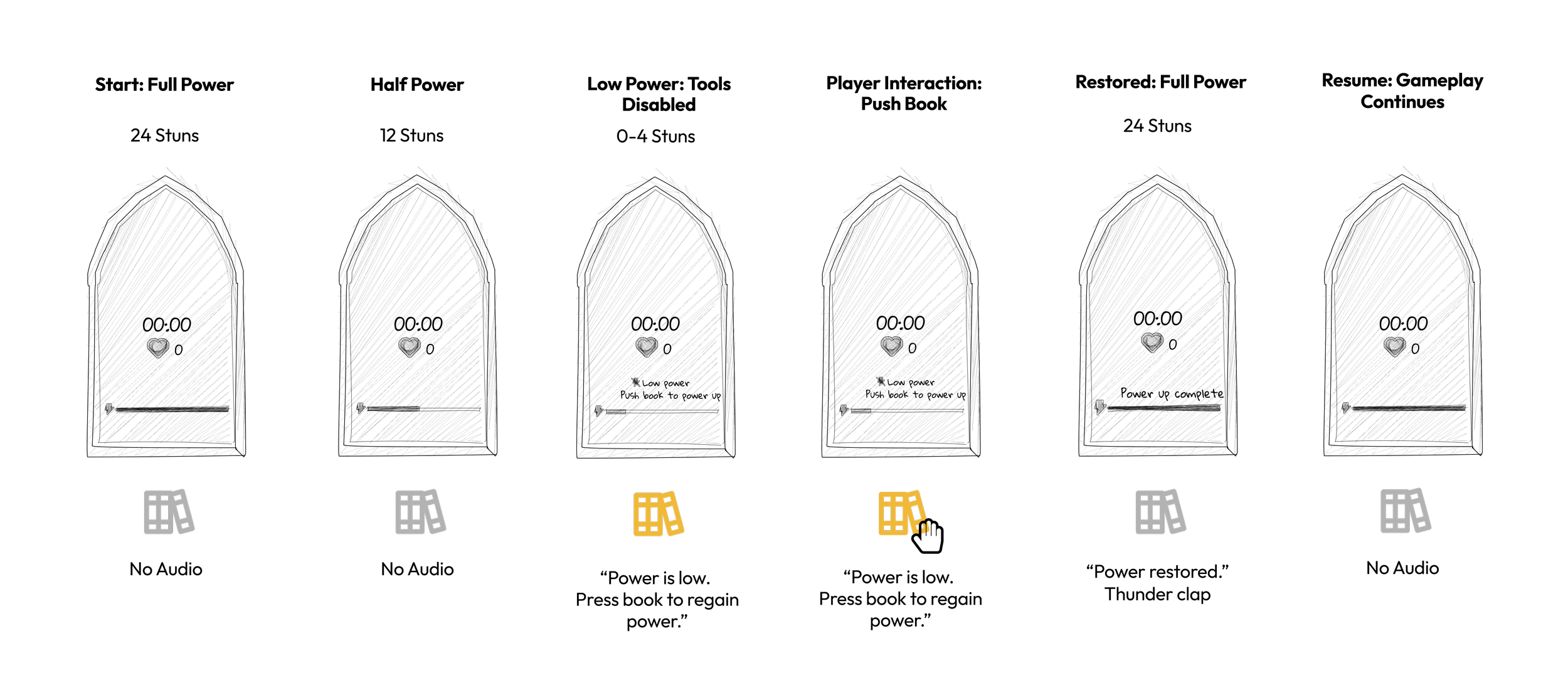
The projected walls act as a shared UI system for all hunters.
They communicate:
Time remaining
Hearts remaining
Power status
Game events
Designing for State Transitions
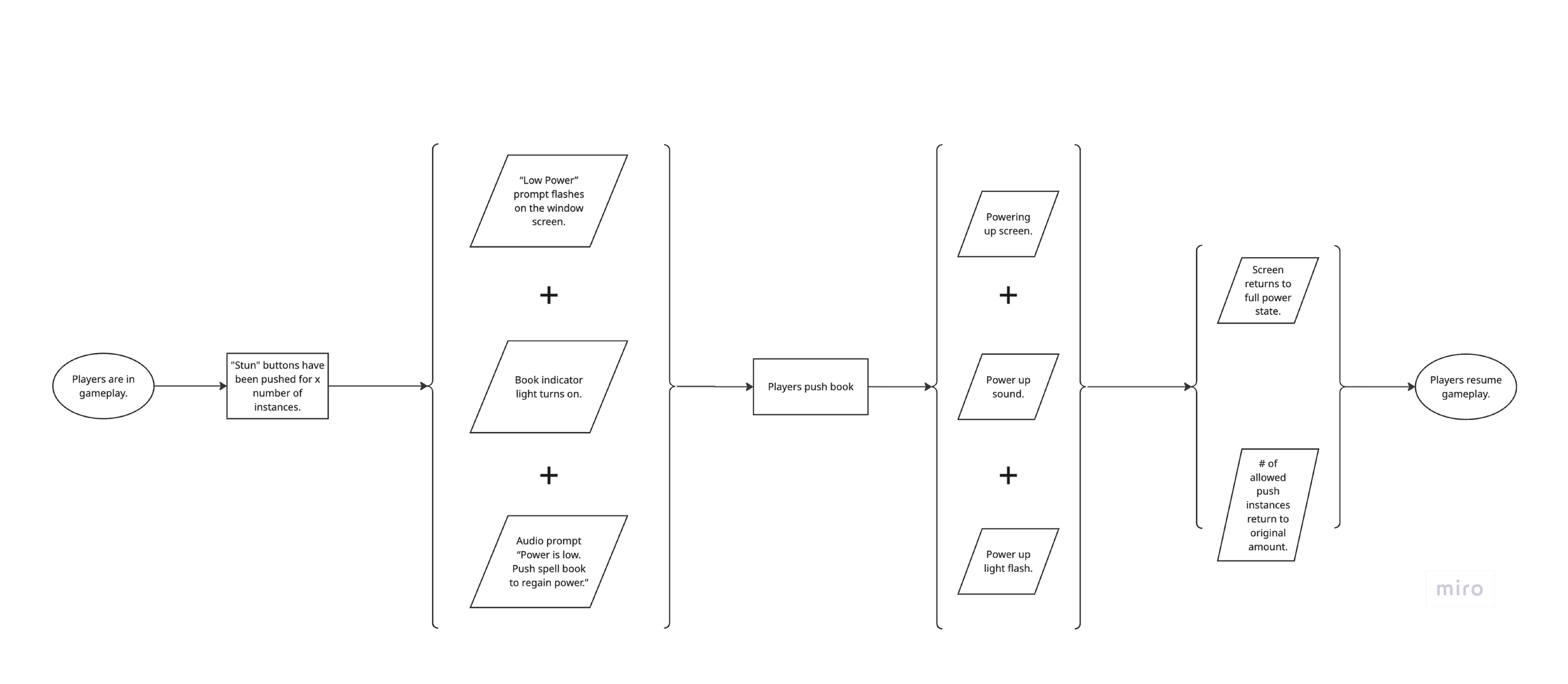
Instead of static screens, the system responds dynamically:
Full Power → full control
Low Power → limited tools
Disabled → no interaction
Restored → gameplay resumes
This creates a tight feedback loop between physical action and digital response.
System 2: Solo Ghost Controller Room
The Hidden Control Layer
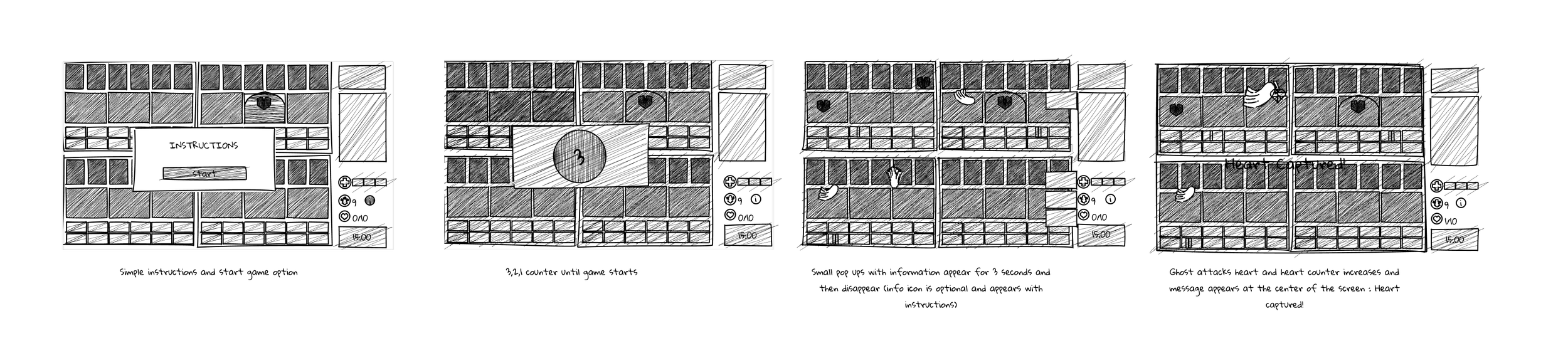
The ghost operates from a private command interface providing:
Real-time spatial awareness
Health tracking
Ability control
Stun feedback
This dashboard empowers strategy while maintaining clarity under time pressure.
Designed for Scalability
Modular Framework
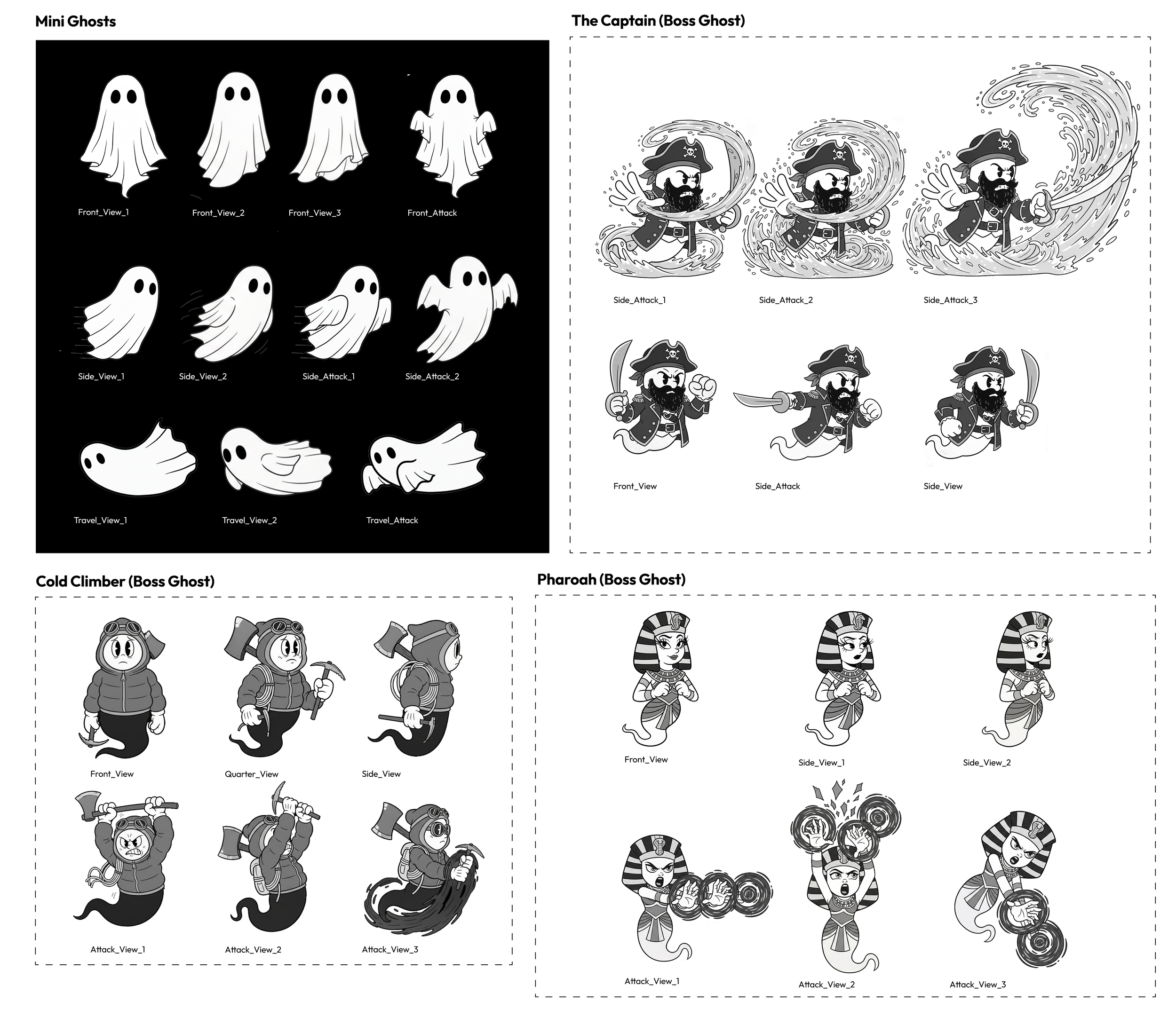
The system supports multiple ghost characters through:
Standardized health logic
Reusable animation states
Modular ability structures
New characters can be introduced without redesigning the core interface.
Outcome
The final experience:
Clearly differentiates player roles
Maintains readable feedback during fast gameplay
Supports scalable character expansion
Creates tension through intentional information imbalance
Next Up
Enterprise Trading Platform Optimization
This project focused on improving the usability and workflow efficiency of an internal commodities trading platform used by professional traders and risk analysts.